
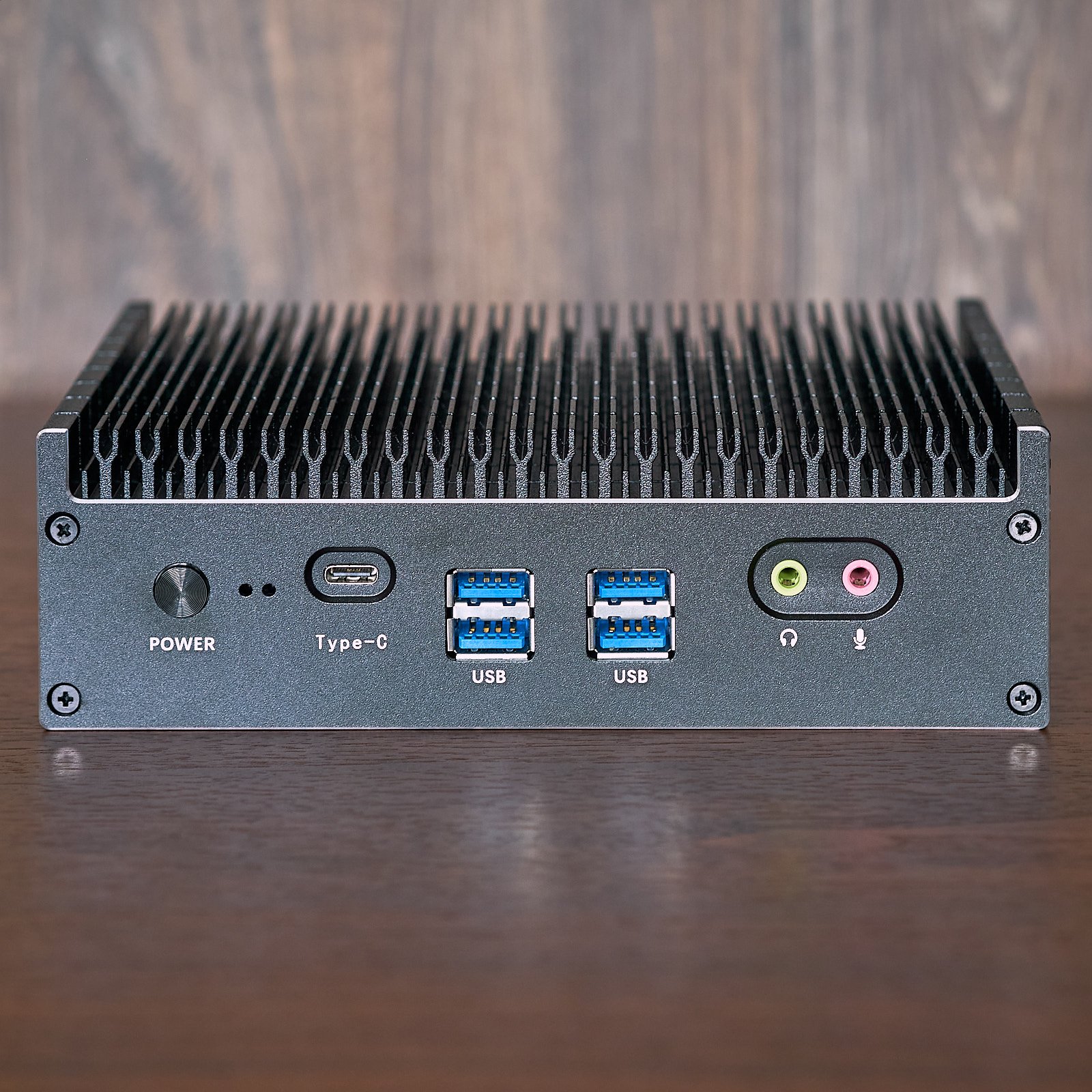
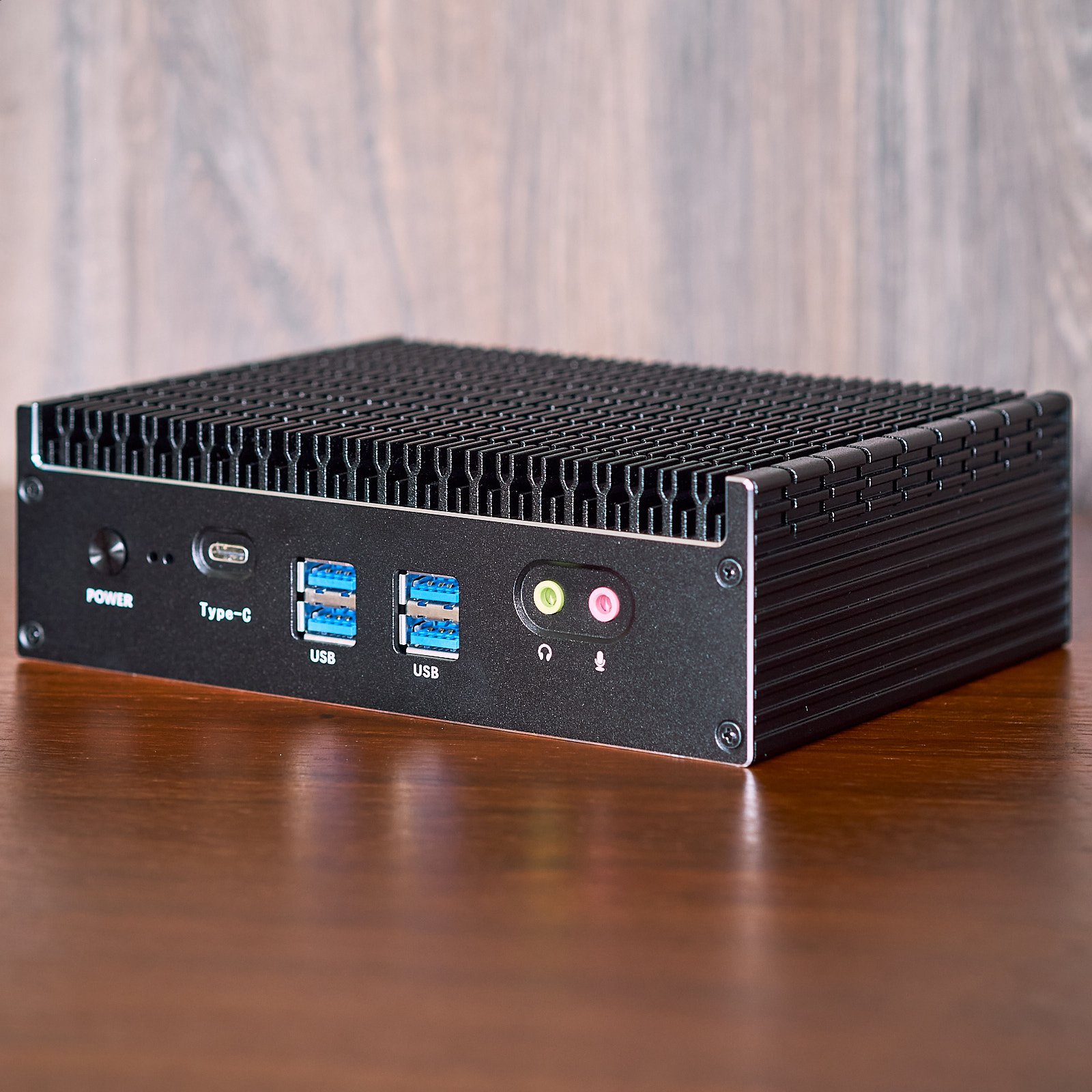
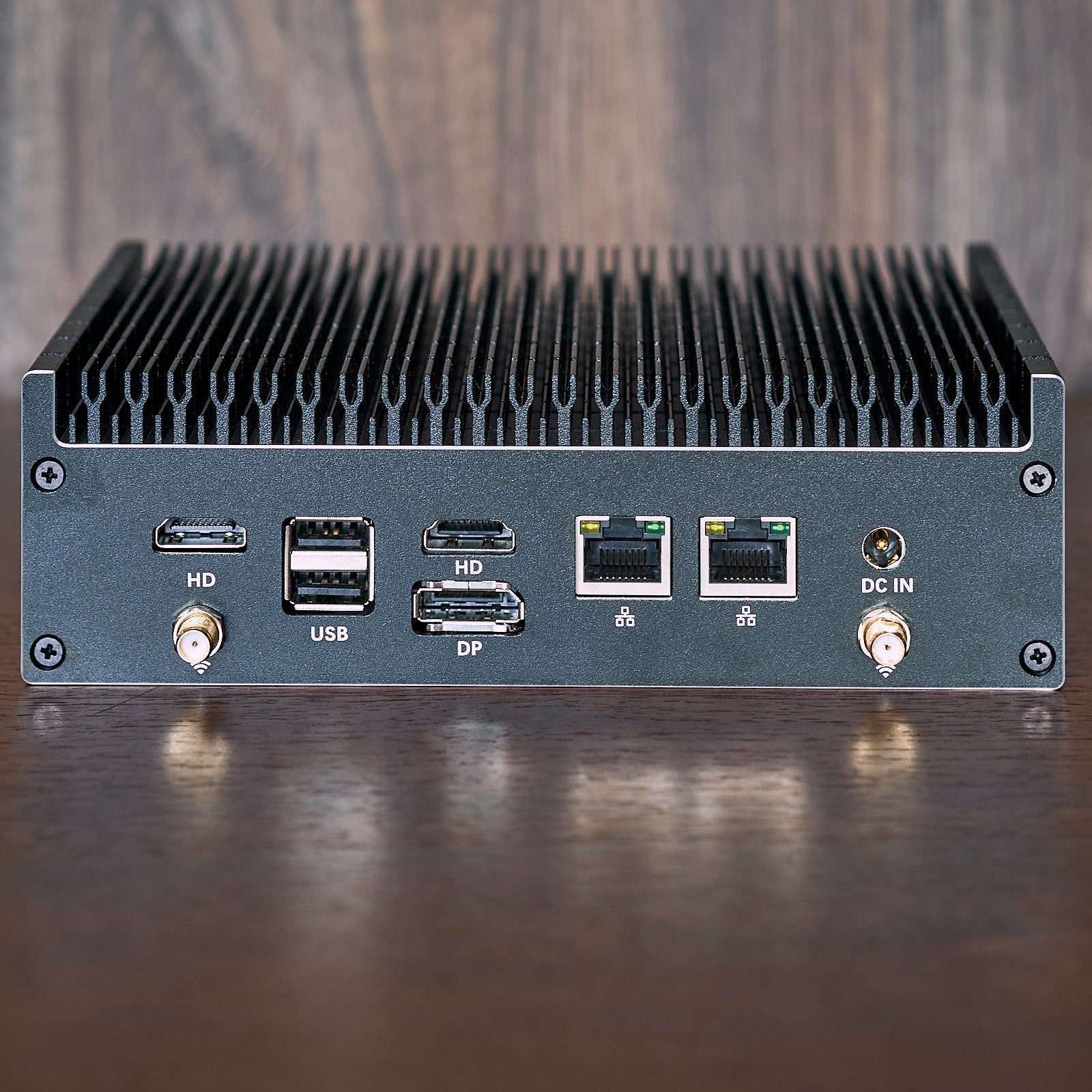
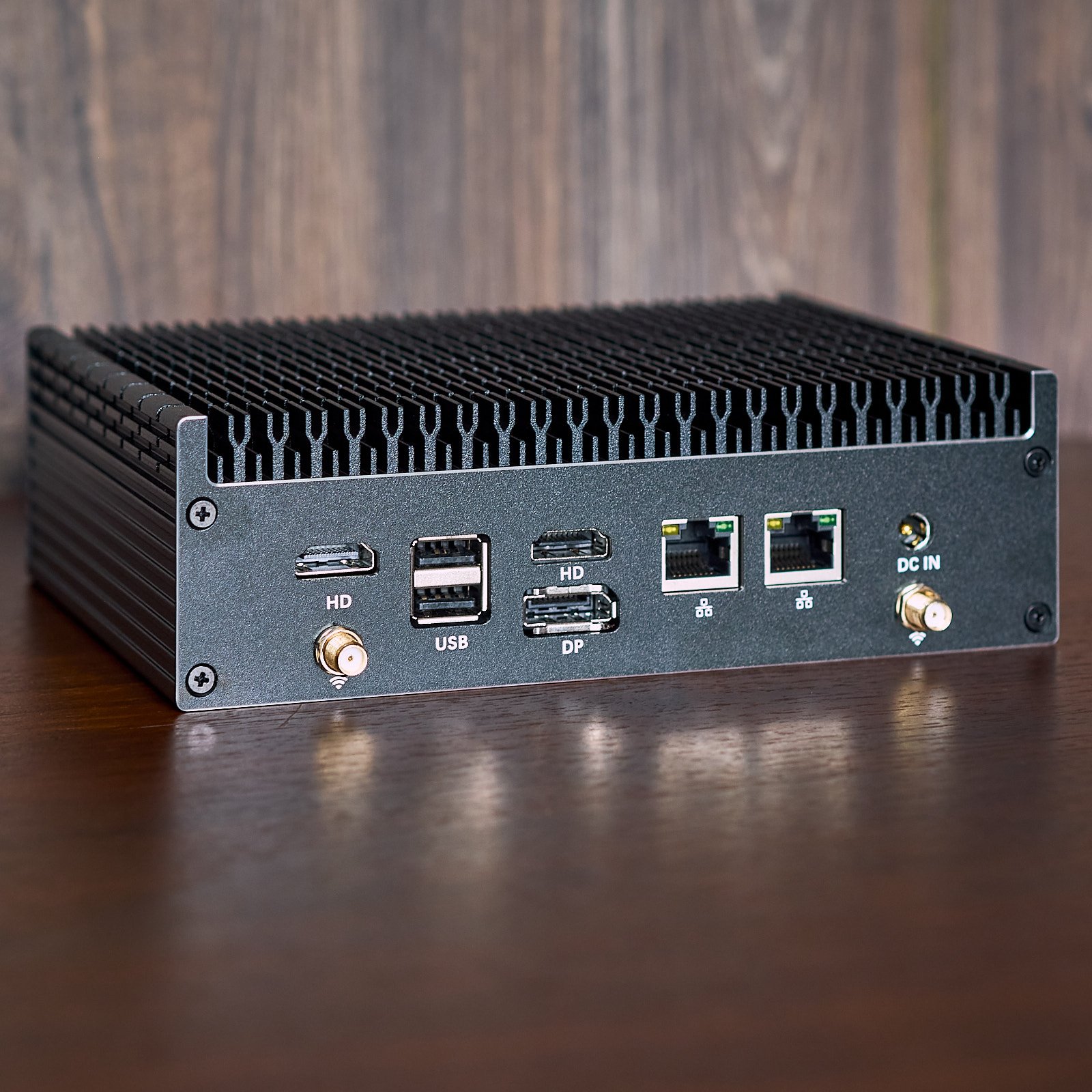
Description
Read here for an extensive writeup on the ecosystem of Roon and how valuable a Mini PC is in the running of Roon.
Intel Processor N100 is QA first Mini PC offered for just being used as a perfect budget and highly capable Roon Server/Core.
If upsampling of music with HQPlayer is required, this is what will be needed – an i7 1255U 12th Generation CPU (upgraded from previous batch of 11th Gen i7 1165G7) still with a fanless make of a Mini PC.
No more clunky desktop PC for computer digital audio playback. Cooling fans in dekstop computer add interference and noise to audio signal and neither is big internal PSU beneficial for audio playback.
Mini PC is portable, and stripped of all non-essential parts perfect for audio use in a hifi system. Most importantly, it is fanless, so it can be situated near and within the hifi components of your setup with zero noise. Fed with a cleaner power from a Linear Power Supply (LPS), this fanless i7 Mini PC can absolutely be the component for improving the digital audio source even further.
HQPlayer requires a great deal of CPU processing power for the different types of filter and modulators, especially so for DSD output. Granted a high-end desktop PC can have the ultimate processing prowess for the running of HQPlayer in outputting DSD1024, and possibly higher, with some heavy filters and modulators, that also comes with an insanely high cost of investment package and a bulky system to configure and maintain. Yet if one’s DAC is capped at DSD512 or DSD256, having the beast of a PC system is just meaningless and underutilising the specs of it, so this is where an i7 Mini PC like ours can be the perfect unit for such use cases at fraction of a cost.
Our i7 Mini PC has been tested to work perfectly and optimally at up to DSD512 with some filters/modulators, and has more filters/modulators to choose and run capably at DSD256. See list below for some recommendations of filter and modulators to run the respective DSD output.
Upsampling of PCM is never a CPU-intensive task. But if we are talking about sampling rates like 1.4112 mHz and 1.536mHz, which are 32 times of upsampling from 44.1kHz and 48kHz respectively, then one will require an i7 CPU to do the job better. The best thing is this i7 1255U Mini PC can run most, if not all, of the intensive filters for PCM upsampling to 1.536mHz with zero drop outs and only a moderately high CPU usage.
Heat will definitely be present in fanless Mini PC because there is this lack of fans to cool the CPU. But passive cooling with such high surface area of a massive aluminium block and numerous fins still does a great job of temperature control. If DSD512 output in HQPlayer is set, since that is the higher CPU intensity of processing, it can be warm to touch for a few seconds, and uncomfortably hot to touch if hands are held longer – these are all perfectly normal.
But what QA did further in better optimising the temperature cooling is in the reapplication of thermal paste over the stock one. By using trusted and far better Japanese overclocking-grade thermal paste, we have managed to keep the average running temperature lower than over 10c compared to using the stock thermal paste.
By sticking additional rubber feet beneath the unit, we also make the placement of the Mini PC sturdier. But more importantly, the increase in height has allowed the airflow beneath the unit to massively improve as well, contributing to another means of better temperature control.
Running a light Fedora Linux system meant you can leave it without worries of inconsistent and buggy updates like Windows that also eat unnecessarily into the system resources – so they are optimised purely for audio playback.
Customer can have the option of installing either Roon Server or HQPlayer or both in Fedora KDE Plasma. So this means just a single i7 MiniPC can run both Roon Server as well as HQPlayer.
HQPlayer installed will be the Embedded version. These softwares will all start automatically on boot. So when all settings are configured and done first time, subsequently will just be switching on and off the Mini PC.
HQPlayer Embedded installed will be the trial version, so customer has to purchase the operating license separately. Upon purchased of the license, a file containing the activation key will be sent, which you can forward to us to activate on your behalf during installation and setting up.
Unlike the N100 Mini PC, wifi is available in this i7 unit by just screwing on the attached wifi antennae. But we still recommend connecting the unit by ethernet LAN cable for the highest quality of sound possible.
If Roon Server is installed, one can search for and configure Roon using Roon Remote apps in Android or iOS. This Mini PC is still meant to be run headless – without the need for a monitor. But using it as a computing unit for HQPlayer will still require configuration options to be set based on one’s preferences of the filters to be used. A monitor, mouse and keyboard can be useful, but if it is meant to be run headless, we want to make sure it can.With HQP Embedded, the configuration page is easily accessible through the IP page with a browser.
Although both Roon Server and HQP Embedded are working behind, if one needs to access the GUI of the Fedora KDE Plasma OS, one can still use NoMaching to remote access it through the same app installed on one’s tablet/phone/PC. It will be configured inside the Mini PC for you, so users only need to install NoMachine on their devices and can connect easily. No worry, instructions will be provided.
A dummy HDMI plug is provided which will need to be plugged in at the back to ‘cheat’ the OS that a display is attached. Only then can the remote display connection works. It is a means to shut down the system safely and automatically in 30 seconds by just pressing the power button.
Thunderbolt 4 in USB Type C is available to connect various peripherals and even display.
These are some of the HQPlayer filters which QA has tried and think are really beautiful in sound.
- Poly-sinc-gauss-long (spacious, great imaging, clean high frequencies)
- Poly-sinc-ext2 (good midrange and dynamic)
- Poly-sinc-lp-2s (like gauss-long but airier and slightly lesser bass)
- Poly-sinc-gauss-hires-lp (like gauss-long but slightly lesser midrange)
- Poly-sinc-short-lp-2s
- Poly-sinc-mp-2s
- Poly-sinc-hb-2s
For DSD512, usable modulators will be mainly non-EC ones like ASDM7 and AMSDM7 512+fs. With DSD512, using AMSDM7 512+fs is highly preferred.
For DSD256, we have more usable modulators that include some, but not all, the EC ones. The exceptional newer ones like AMSDM7ECv2 and AMSDM7ECv3 all have their fans in the internet, and they are totally usable here. QA somehow thought ASDM7EC-super and AMSDM7EC 512+fs can be quite special.
In addition to the above filters recommended for DSD512, a notable few more usable for trying at DSD256 are:
- sinc-M
- sinc-MG
- sinc-MGa
Sign up Roon here with this referral link and we both get extra 30 days!
SPECIFICATIONS
- Processor: Intel Alder Lake U 12th Gen i7 1255U (upgraded from previous batch of Tiger Lake 11th Gen i7 1165G7) Processor
- Memory: Supports up to 64GB DDR4 3200 mHz (uses Crucial/WD or equivalent minimum PCI 4.0 for NVME SSD)
- Ethernet ports: 2x LAN (additional LAN port depending on variant)
- Display outputs: 2x HDMI, 1x DP, 1x Thunderbolt 4
- Storage: 1x M2 NVME SSD PCIE 4.0 supports up to 2TB (uses Crucial/WD or equivalent minimum PCI 4.0 for NVME SSD)
- Additional storage expansion: 1x SATA 3.0
- USB: 2x USB 2.0, 4x USB 3.0
- Power: 19V 3.5A DC 5.5/2.5mm (adapter provided with SG plug adapter)
- Dimension: 190 x 127 x 63mm
- Weight: Approx 1.4kg
Lead time 9-11 days for assembly, installation and test before shipping/collection.
Mini PC has no warranty due to the inherent nature of upgradeability done possible by users themselves. But we will always be doing our best to support any technical questions or clarifications.


Reviews
There are no reviews yet.